History

Initial Establishment
The Faculty of Science was initially established in 1977 B.E. (1977 A.D.) as part of the Faculty of Industrial Education and Science. It was responsible for teaching fundamental science and mathematics subjects to all undergraduate programs in the Institute.
1977

First Intake of Students
In the academic year 1982 B.E. (1982 A.D.), the Faculty admitted its first batch of undergraduate students in the Bachelor of Science programs for Industrial Chemistry, Applied Physics, and Applied Statistics. In the academic years 1984 B.E. (1984 A.D.) and 1985 B.E. (1985 A.D.), the undergraduate programs in Applied Mathematics and Biotechnology were opened for admission.
1982
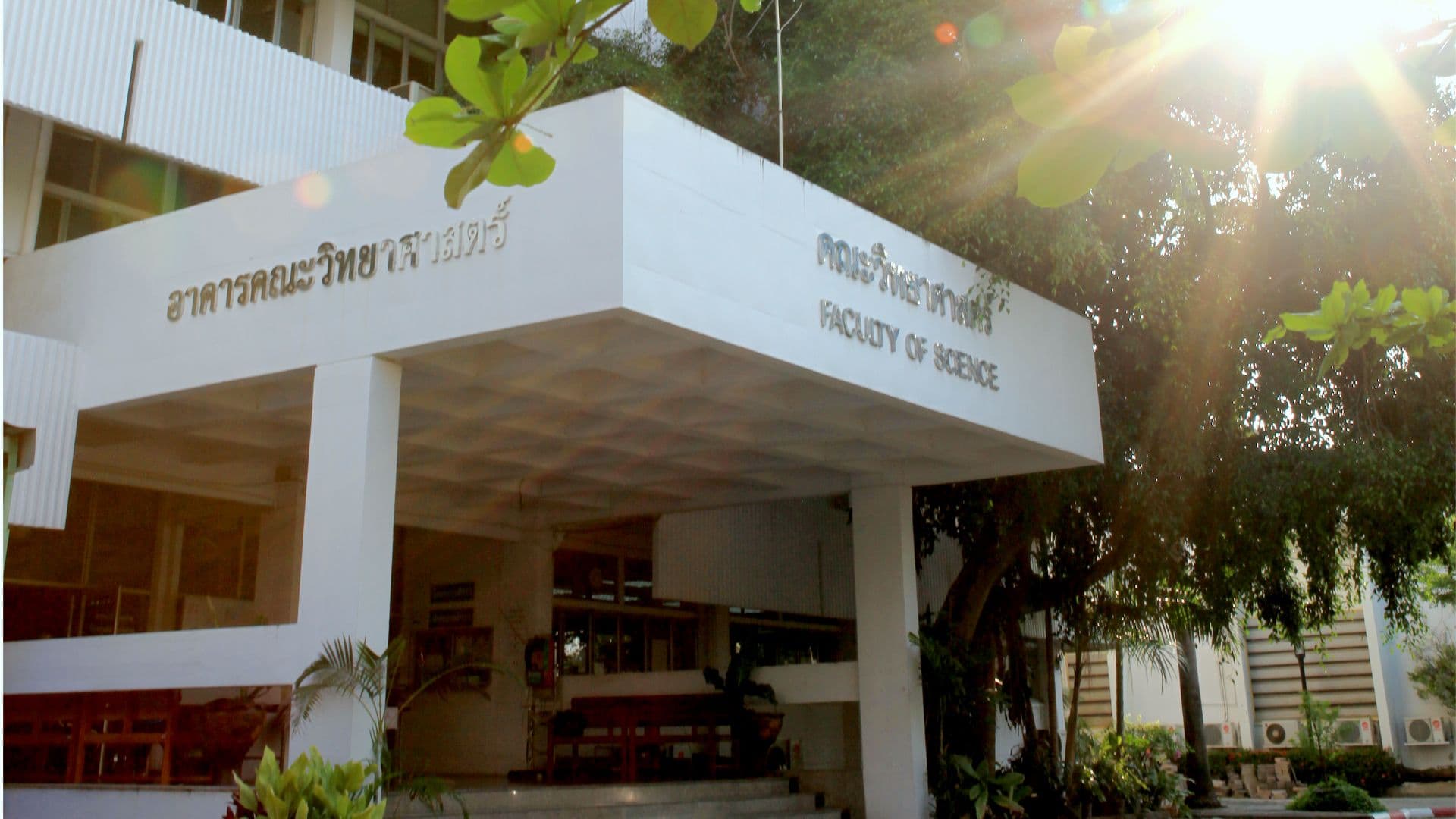
Formal Establishment of the Faculty of Science
Due to the expansion of its duties and responsibilities, a Royal Decree formally established the Faculty of Science on December 8, 1988 B.E. (1988 A.D.). The Faculty subsequently expanded its graduate production to include other fields, as well as opening admission for master's and doctoral degree programs.
1988
Transition to an Autonomous Public University
The Institute transitioned to an Autonomous Public University, which is not a government agency under the laws on public administration, the law on the administration of the Ministry of Education, and the law on the reorganization of ministries, bureaus, and departments, nor is it a state enterprise under the law on budgetary procedures and other laws, in accordance with the King Mongkut’s Institute of Technology Ladkrabang Act, B.E. 2551 (2008 A.D.).
2008
Internal Unit Organization
The internal units of the Institute were organized according to the announcement published in the Royal Gazette on July 14, B.E. 2551 (2008 A.D.). The academic units at the Faculty level were further internally divided according to the Institute's Announcement B.E. 2552 (2009 A.D.) as follows: 1. Academic Support Division 2. Academic Division, comprising: - Division of Mathematics - Division of Computer Science - Division of Chemistry - Division of Biology - Division of Physics - Division of Statistics - Scientific Instrument Center
2008